ConnectNEO Highlight: Building a More Equitable and Sustainable Food System in Ohio
More residents in Cuyahoga County are turning to food assistance from the Greater Cleveland Food Bank and its partners today than during the Great Recession of 2007-2009, highlighting the growing strain on food assistance systems in the region.
Across the food bank’s six-county service area, one in four children live in poverty and more than 80,000 people visited an emergency feeding program for the first time in 2025. Overall, the food bank provided assistance to more than 404,000 individuals last year, underscoring the persistence of food insecurity and inequitable access to nutritious food in Northeast Ohio.
At the state level, 1.44 million people received SNAP benefits in fiscal year 2025, representing approximately 12.1% of the population, ranking Ohio 21st nationally among all states and Washington, D.C. in participation in the Supplemental Nutrition Assistance program (SNAP).
Whether a senior citizen is losing benefits because of paperwork challenges, a refugee no longer qualifies for assistance, or a working parent is removed from SNAP due to working a few too many hours unexpectedly, improving policies to build a more equitable and sustainable food system is a necessity.
Food Inequity Across Northeast Ohio
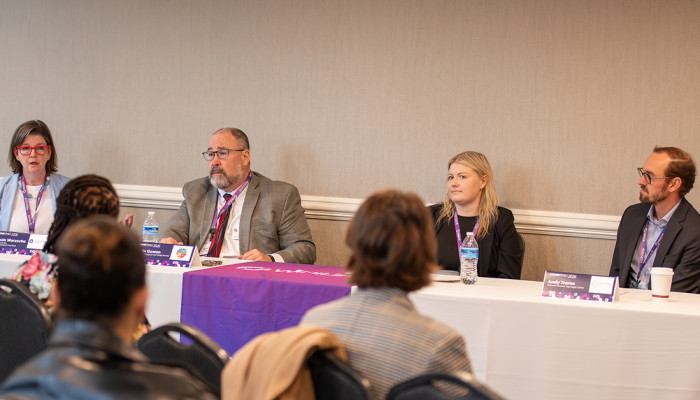
At WellLink’s recent Connect NEO conference, healthcare and community leaders came together to discuss some of the most pressing challenges facing Northeast Ohio, including food insecurity. The session, Feeding Ohio: Building a More Equitable and Sustainable Food System, featured a panel that included Kevin Gowan, Cuyahoga Jobs and Family Services; Emma Messett, Hunger Network; and Andy Trares, May Dugan Center; and was moderated by Kristin Warzocha, Greater Cleveland Food Bank.
Access to food in Ohio is increasingly difficult to maintain as federal SNAP rules tighten and food costs increase, leaving many Ohioans caught between the growing need for assistance and diminishing access.
The panelists discussed a range of topics, including what a more equitable food system looks like in practice.
Andy Trares highlighted the impact of the location of pantries and distribution sites as well as their hours of operation as having potentially a negative impact on those in need. As one in five Cleveland residents do not have access to household transportation, getting to a food pantry or a grocery store can be a challenge that impacts whether they have access to food.
Compounding the transportation issue, many areas across Northeast Ohio are considered “food deserts,” geographic areas where residents have limited access to affordable, nutritious food, requiring more money to be spent on gas and car maintenance in order to travel to the nearest grocery store.
Food deserts are often viewed as simply having a shortage of grocery stores. The reality is more nuanced and complex. Even when a store exists, stocking fresh produce carries a financial risk.
Fruits and vegetables, especially organic, can spoil quickly. This can be a serious risk to smaller retailers that lack the financial resources to absorb a loss if produce does not sell. This results in communities having access to food, but not necessarily healthy options that improve overall well-being.
Systemic barriers like food desserts and lack of transportation options are rooted in part in the legacy of redlining nearly a century ago. The discriminatory housing practice, which emerged in the 1930s, involved the federal government grading neighborhoods for mortgage lending, often outlining in red the areas with larger Black, immigrant or low-income populations.
“From redlining back in the 1930s, our East and South communities were hit the hardest and it still prevails today. About 59% of Cleveland residents live in a food desert and one in five East Cleveland residents does not have access to household transportation,” said Messett.
The impact of redlining has limited access to mortgages and investments, contributing to lower homeownership rates, reduced property values, and fewer commercial amenities.
The Impact of SNAP Benefits and the Changing Work Requirements
The panel explained the new challenges faced due to cuts to SNAP benefits and the reduction in the number of recipients being able to claim an exemption from work requirements.
Under the One Big Beautiful Bill Act of 2025, several groups of people on SNAP previously exempt from work requirements must now meet them. These groups include:
- Adults aged 55 to 64
- Parents of children ages
- Veterans
- People experiencing homelessness
- Kids aging out of the foster system
Gowan spoke passionately about the challenges ahead as these new requirements impact households across Ohio, explaining how the government shutdown in the fall of 2025 altered work requirements.
“The shutdown changed things significantly regarding who can receive SNAP without work requirements. Increasing the age range to include individuals up to 64 added 21,000 people to the work population in Cuyahoga County. We’re at 180,000 people receiving SNAP now, down from 190,000 just six months ago,” he said.
Beginning Oct. 1, 2026, the federal government will reduce its administrative match rate from 50% to 25%. This means states must cover a larger share of SNAP’s administrative costs, increasing from 50% to 75%.
Compounding the issue, starting in 2028, Ohio may need to cover a portion of SNAP benefit costs based on its payment error rate. Ohio is required to get its error rate below 6% by Oct. 1, 2027. The state's 2025 error rate was 9.13%, and if fails to meet the 6% threshold, the state would have to pay more than $300 million a year to supplement the program.
Ohio is not automatically required to replace every federal dollar lost. State policymakers would need to decide whether to appropriate additional state funds, reduce services or make other budget adjustments.
Gowan continued, “There is a real possibility the state of Ohio will be on the hook for a portion of the cost of the benefits. To put it in perspective, on average, we distribute $34,0000 to $36,000 per month in Cuyahoga County alone. That has always been 100% federal money to administer the SNAP program.”
Additionally, the law makes refugees ineligible for SNAP assistance.
“Starting November 1, any refugee in Ohio who does not have permanent residency, a green card, is no longer eligible to receive SNAP benefits”, said Trares. “In addition to May Dugan Center operating a food pantry, we do refugee resettlement so a lot of them turn to us as well because they have no other resources. All of our numbers are up year over year.”
According to the United States Department of Agriculture, the primary goal of SNAP is to reduce food insecurity, but the program also acts as an automatic stabilizer during economic downturns. As income falls, SNAP spending tends to increase as more individuals become eligible and enroll in the program.
Reduced access to SNAP also negatively impacts local businesses and regional economies that benefit from the spending generated by the benefits. SNAP enrollees spend their benefits, and income is generated for all involved in the production, distribution, marketing and sales of the final goods and products sold, creating a multiplier effect throughout the economy that may extend well beyond initial money distributed for the SNAP benefit.
Another factor affecting food equity is Medicaid coverage. As work requirements change and more individuals lose health insurance through Medicaid, lower-income households will be forced to spend a greater share of their limited income on healthcare rather than food.
Food and Job Assistance Resources in Ohio
While policy changes may affect eligibility for some programs, resources remain available to help Ohioans access food assistance, job training and employment support.
SNAP recipients may qualify for the SNAP Employment and Training program through the Ohio Department of Job and Family Services, which provides training, skills development, and work experience opportunities.
OhioMeansJobs Centers across the state offer free assistance to job seekers, including career counseling, resume help, workshops and access to computers.
ApprenticeOhio offers a pathway to earn an income while you learn in fields like construction, healthcare, information technology and advanced manufacturing.
For those facing immediate food insecurity, local food banks, food pantries and community organizations remain critical resources. The Greater Cleveland Foodbank and its network of more than 1,000 partner agencies continue to provide food assistance throughout Northeast Ohio.
Addressing food inequity is a complex challenge that will require collaboration among community organizations, policymakers, healthcare providers and residents. The conversations at ConnectNEO demonstrated that meaningful progress is possible when partners come together to identify solutions, share resources and work toward a more equitable and sustainable food system for all Ohioans.
Connect 2027
The food insecurity panel was just one of nearly a dozen sessions at this year’s annual conference. Mark your calendars for next year’s event, which will take place May 6, 2027, and consider submitting a proposal to present.